
Water Heater Replacement in Brooklyn, NY
Is your water heater dripping, showing rust or running cold halfway through a shower? Our licensed plumbers handle water heater installation as well as water heater replacement throughout Brooklyn, NY, covering gas and electric tank heaters and tankless models, and if a water heater repair is the smarter move, we will tell you straight.
HOW IT WORKS
How Water Heater Replacement Works
A tank-for-tank swap with a similar model can usually be done in one visit. Going tankless or moving the heater takes longer, since the gas piping, vent or electrical supply may have to change too.
Step 1
Check the Old Heater
Before suggesting anything, the plumber inspects the old heater for its age, fuel, venting and location in the basement or closet, and checks for leaks, rust or sediment.
Step 2
Choose the Replacement
Together you settle on the best size and style, from a gas or electric tank to a tankless model, depending on how many people in your household or building need hot water and when they need it.
Step 3
Remove and Install
Water and gas or electricity are turned off, the old tank is emptied and hauled away, and the new heater is tied into the water piping and the gas line or electrical circuit, with gas models vented into the chimney or flue, plus a relief valve discharge pipe and an expansion tank if required.
Step 4
Test and Walk Through
Once the tank fills and trapped air is bled from the pipes, the heater is fired up and tested for leaks and proper venting. The plumber then points out the shut-off valves and explains how flushing keeps sediment in check.
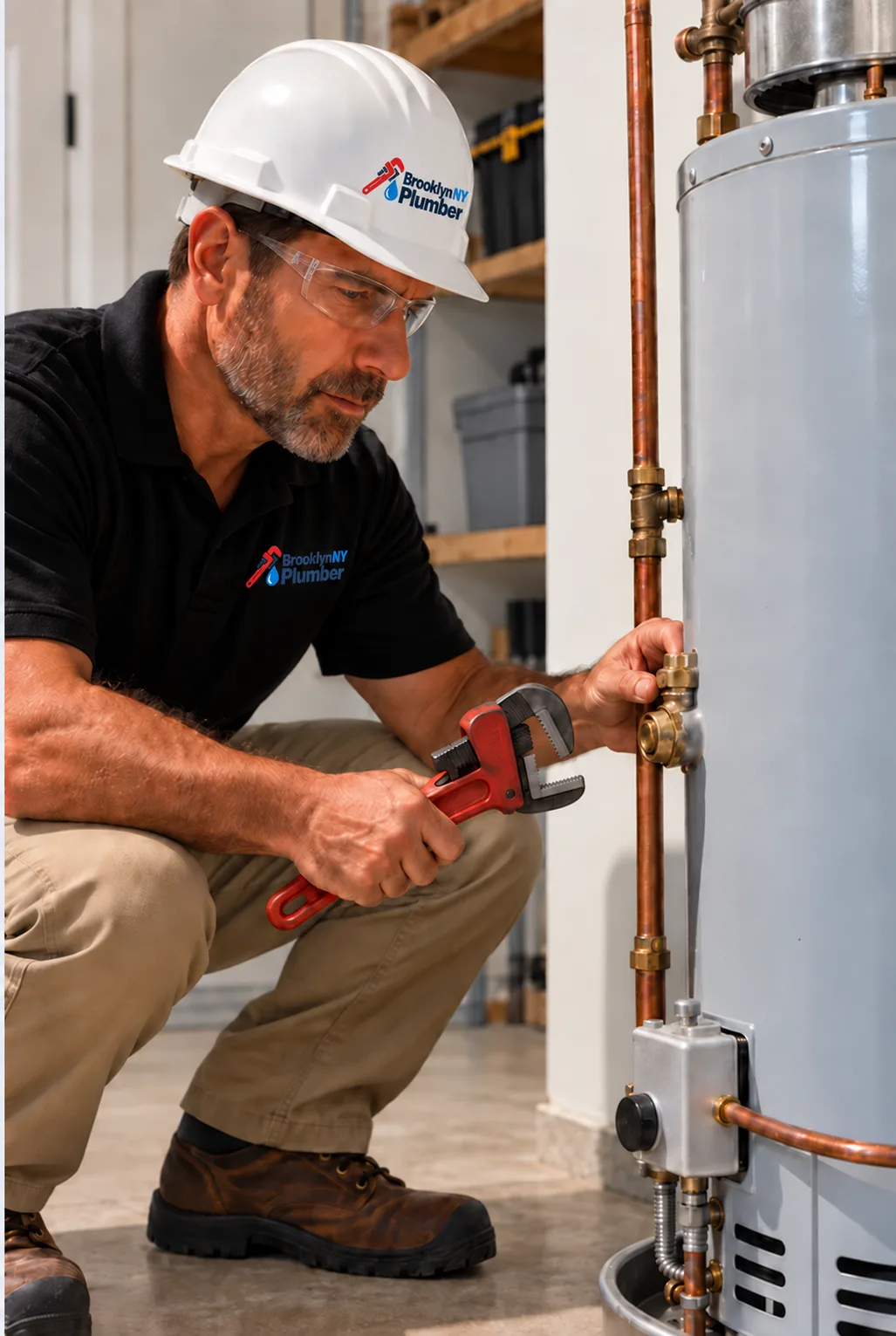
WATER HEATER REPLACEMENT
Water Heater Replacement and Installation for Brooklyn Homes
In most Brooklyn homes the water heater sits in a basement or a utility closet, and a cramped corner can make the swap trickier than it seems. The replacement has to fit the space and keep proper clearances, gas models must vent safely into the chimney or flue, and the relief valve needs a discharge pipe that ends somewhere safe. Water heater installation in a different spot, for example shifting a heater out of a closet, calls for added planning around the gas piping, the venting and the drain.
Sediment is the other thing to watch. New York City’s water, piped in from reservoirs upstate, is fairly soft, so thick mineral scale is less of an issue than in many places, yet sediment still collects at the bottom of a tank over time. Left alone, it forces the heater to work harder, can cause rumbling and may wear the tank out sooner. Flushing the tank once a year helps, and a tankless unit still needs periodic maintenance to keep running well.
A replacement may require an NYC Department of Buildings permit, and co-op and condo boards often have their own rules, so ask about both when booking. We replace and repair water heaters across Brooklyn, including Park Slope, Williamsburg, Bay Ridge, Bensonhurst, Flatbush and Brooklyn Heights, and in Queens.
REPAIR OR REPLACE
Water Heater Repair or Replacement?
A problem does not always mean a new heater. Water heater repair is often the right call when the tank is still in good condition and only one component has failed, like a worn thermostat, a burned-out element, a faulty gas control valve, the igniter or thermocouple, or a leaky relief valve. Our page on water heater repair and installation in Brooklyn explains those fixes.
A new heater is usually the smarter choice when the tank body leaks, the hot water runs rusty, the unit is nearing the end of its normal life or repair costs keep piling up. There is no patching a leaking tank, and putting it off can mean a flooded basement or closet, or water in the unit below.
Whichever way it goes, nothing starts until you have heard your options in plain language, including what a repair would take versus a new unit. If water is spreading as you read this, close the cold water valve feeding the heater, then phone our emergency plumber line.

SIGNS IT IS TIME
Signs You Need Water Heater Replacement
Keep an eye out for the signs below. When two or more show up, it usually makes sense to schedule a replacement before the tank gives out on its own.
Leaks From the Tank
A leaky valve or connection is often a simple fix, but water coming out of the tank itself usually means corrosion has eaten through the lining, and there is no repairing that.
Rusty Water or Rumbling
Rust-tinged hot water suggests a corroding tank, while rumbling or popping usually points to sediment on the bottom, which collects over time even with NYC’s fairly soft water.
Age and Repeat Repairs
A typical tank heater lasts roughly eight to twelve years, and neglected sediment can cut that short. If yours is that old and needs repair after repair, replacing it usually gives you more for your money.
Need a New Water Heater? Call Now
Reach out about replacing, installing or repairing a water heater in Brooklyn.
HAVE A QUESTION
Water Heater Replacement FAQs
Clear, simple answers to the questions Brooklyn residents ask most about water heater installation, water heater repair and water heater replacement.
REACH OUT